
(Ishantimes) Bhubaneswar, November 16, 2026: Odisha Governor Brajmohan Ram has called upon journalists to uphold truth, impartiality and social responsibility, stressing that credibility must remain at the heart of journalism. Addressing the National Press Day Celebration 2026 in Bhubaneswar, he said the role of the media should go beyond reporting events and contribute towards creating awareness and bringing positive changes in society.
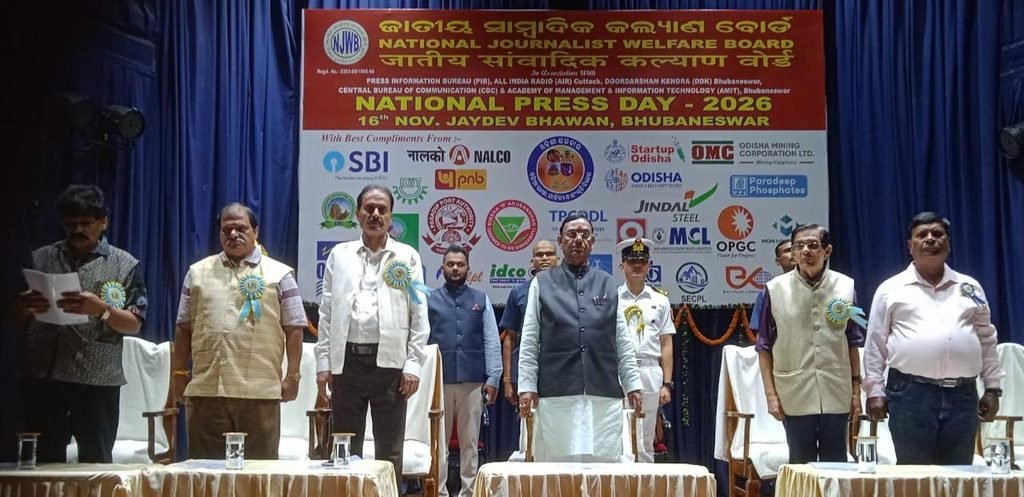
The Governor said that a free and responsible press is essential for a healthy democracy. Describing the media as an important link between the government and the people, he noted that journalism plays a significant role in communicating government policies to citizens while also bringing their concerns, expectations and suggestions to the attention of the administration.
He observed that this two-way communication helps strengthen transparency, accountability and informed public opinion. However, he stressed that freedom of expression must always be supported by professional integrity, impartiality and a strong sense of responsibility towards society.
Fact-checking and Accuracy Crucial in the Digital Age
Highlighting the changes taking place in the media landscape, the Governor expressed concern over the growing circulation of misinformation through digital platforms. With social media and Artificial Intelligence increasingly influencing how information is created and shared, he said journalists need to be more careful about verifying facts before publishing or broadcasting news.
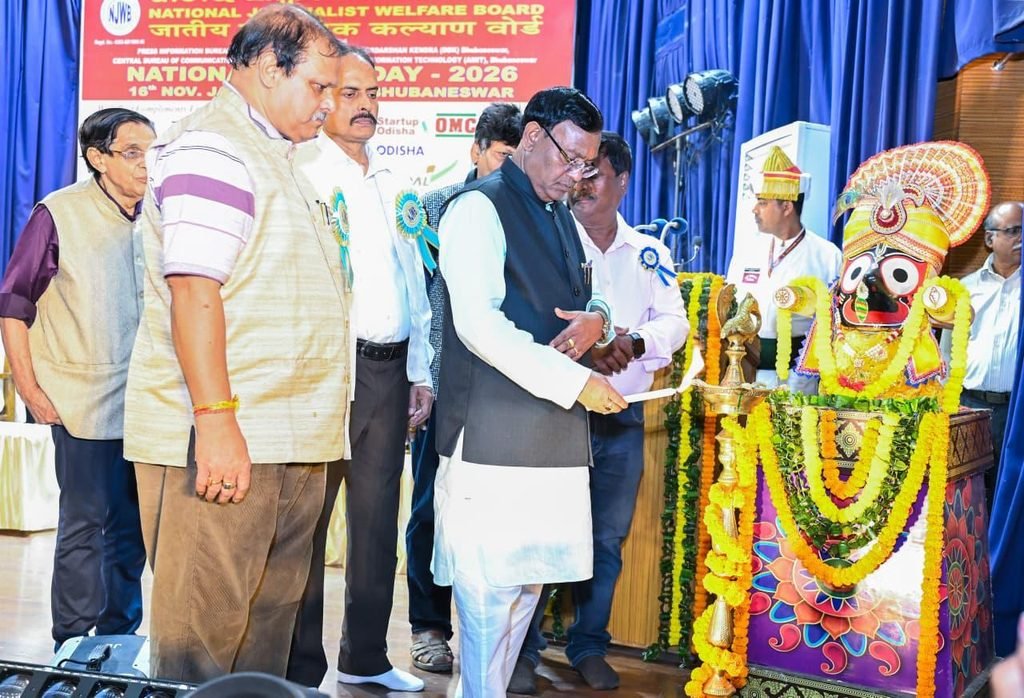
He emphasised that the speed of news delivery should not come at the cost of accuracy. Balanced reporting, proper verification and credibility, he said, are essential for maintaining public trust in the media.
The Governor also urged journalists to give sustained attention to issues affecting everyday life, including substance abuse and drug addiction among young people, food adulteration, crimes against women, child labour, cybercrime and environmental pollution.
He said responsible reporting on these concerns could help create awareness among families, educational institutions and government authorities, encouraging collective efforts towards a safer and healthier society.
Focus on Rural Communities and Government Welfare Initiatives
Ram also highlighted the need for media organisations to bring government welfare initiatives to the attention of people, particularly those living in rural and remote areas. Schemes and programmes related to education, healthcare, agriculture, women’s empowerment, skill development and employment, he said, deserve adequate coverage so that the intended beneficiaries are aware of them.
He further stressed that journalism must provide space to the concerns of marginalised communities and people living in areas that often remain outside mainstream coverage.
Appreciating the contribution of Odisha’s regional media, the Governor said local journalists and publications play an important role in highlighting tribal traditions, cultural heritage, rural life and challenges arising from natural disasters.
He also underlined that ensuring the safety, dignity and welfare of journalists is a collective responsibility. He expressed confidence that impartial reporting and public-oriented journalism could contribute meaningfully to the vision of Viksit Odisha 2036 and Viksit Bharat 2047.
Journalist Welfare and Pension Benefits Take Centre Stage
The welfare and financial security of journalists also featured prominently during the programme.
National Journalist Welfare Board Chairman Deepak Malviya highlighted the challenges faced by media professionals and called for stronger welfare measures, including insurance and pension facilities for journalists who have spent several years in the profession. He particularly stressed the need to support journalists with more than 20 years of service.
Board President Pradosh Pattanaik also recalled earlier initiatives introduced for journalists’ pension and insurance benefits.
As part of the celebrations, 32 senior journalists from Odisha were provided pension benefits in recognition of their long association with the profession.
Journalists and Media Professionals Honoured
Several journalists and professionals were recognised for their contributions to journalism and communication during the event.
K. Ravi of The Statesman was honoured with the Utkal Sambadika Ratna Samman 2026. The National Journalist Excellence Awards were presented to Nagaraju L.M., N. Srinivasan, V. Srinivas Reddy, V. Shashibhushan Rao and Chittradeep Chakraborty.
Amit Singh of Vedanta received the Corporate Communication and Public Relations Award for his contribution to the field. Nine journalism students were also presented with memorial awards to recognise their academic achievements and encourage young talent entering the profession.
Panel Discussion Examines the Changing Role of Journalism
A panel discussion on the theme ‘Journalism – Popularity or Responsibility?’ was another key part of the celebration.
The discussion brought together several senior representatives from the media and public information sectors, including Odisha Chief Information Commissioner Manoj Parida, former Times of India Bureau Chief Rajaram Shatpathi, former Information Commissioner Dilip Bisoyi, Utkal Mail Editor Pitabas Mishra and Utkal Journalists’ Association President Bibhuti Bhushan.
The discussion focused on the responsibilities of journalists in a changing media environment and the importance of maintaining professional values amid growing competition for readership and popularity.
The National Press Day programme was organised by the National Journalist Welfare Board in association with Doordarshan Kendra, Akashvani, the Press Information Bureau (PIB), the Central Bureau of Communication (CBC) and the National Institute of Mass Communication and Information Technology.
The event brought together journalists, media professionals and representatives from different institutions to discuss the importance of credible reporting, press freedom and the need to strengthen the welfare of those working in the media industry.